All Categories
Featured
Table of Contents
A shop near a college campus may have very different need patterns (a regular operate on bagels and lox at 1 a.m.) than one in a city's financial district (where traders may come up for air at 11:30 a.m. for egg salad sandwiches). Other stock management aspects that grocers must think about include optimum shipment times, product packaging requirements, and safety stock levels.
Foreseeable occasions, such as higher need for salads and drinks during summer season months and more need for soups and spicy foods in the winter season, are easier to prepare for.
Stock is one of the most essential possessions for any business, and reliable inventory management is particularly important in the hectic world of e-commerce. You need to fulfill the need for quick shipment by ensuring there's constantly sufficient stock to fulfill customer orders, but without binding money in excess stock.
Stock can include basic materials, parts, and completed goods prepared for sale. Stock management is the procedure of handling and monitoring this stock in the most efficient way possible so that you constantly have the correct amount in the best place at the ideal time. It has to do with knowing how much is needed and when to purchase it, and keeping track of everything across several locations and sales channels.
Streamlining Store Operations to Build Financial Sustainability
When buying brand-new inventory for your warehouse, you ought to aim to buy the financial order amount (EOQ). With Brightpearl inventory management, you can track inventory throughout its journey and make precise projections to guarantee you meet future client need. Technically, the meaning of inventory management covers the period between stock showing up from a provider and being delivered to a customerthat is, the time when it's in your warehouse or store.
Let's clean up the significance of inventory management and inventory control. The terms are frequently used interchangeably, however stock management has a much more comprehensive scope. Inventory control, order management, supply chain management, and warehouse management can all be covered by inventory management. Source: The process begins when you put an order with a provider, although you may state it begins even previously when you use forecasting to predict the needed order quantity.
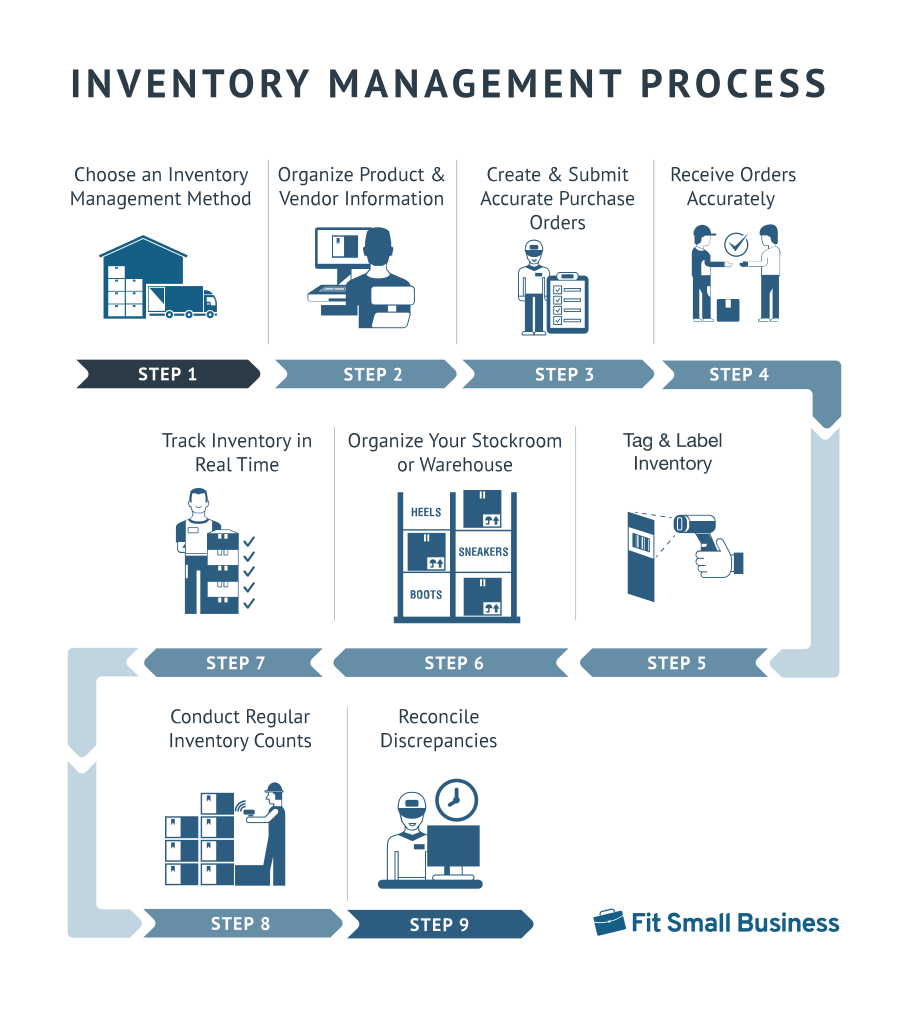
Larger centers will have a specific getting area where stock products are inspected and sorted before being put away. Each product is appointed an SKU (stock-keeping system) code, which is participated in your stock management system. Product may likewise be tagged with barcodes or RFID (radio frequency identification) for much easier tracking.
Whether you're selling online or through a physical shop, your system must automatically update inventory levels whenever an item is purchased (and if it's returned). All of these phases can be carried out more effectively with a properly handled process circulation so that everybody understands what's supposed to take place and when.
Cutting Operating Expenses Via Smart AutomationCost Reduction Tactics for Modern Storefronts
The methods you use will vary according to different types of inventory, with some being more suited to certain services than others. Let's take a look at some of the primary techniques of inventory management: ABC analysis works by dividing stock into 3 classifications based upon their worth and amount. The idea is to identify the products that matter most to your business.
Cutting Operating Expenses Via Smart AutomationSource: Item in classification A are high in value however low in amount, while classification C items are low in worth however high in quantity. Category A goods are more expensive however offer gradually, so you do not need so lots of on hand.
You don't keep any safety stock on hand. JIT can be ideal for smaller sized businesses that want to invest as little as possible in stock and lower overhead expenses.
The dropshipping technique indicates that products are shipped straight from provider to client instead of being stored at your location in between. You don't require to manage your stock at allyou just sell the products via your site and pass customer orders directly to the dropshipper. Smaller business typically favor this approach because it removes the cost of warehousing.
The consignor keeps ownership of the stock till it's soldat which point, the consignee pays.

Latest Posts
Understanding Commercial Lending Rules in 2026
Understanding Essential Commercial Funding Requirements in 2026
Reducing Costs Through Automation in Modern Storefronts