All Categories
Featured
Table of Contents
Walmart's vendor-managed design, on the other hand, suggests providers can access their own information from Walmart's info system and have more control over their inventory management requirements. Source: Efficient starts with understanding what you have in stock, how it's performing, and when you'll require more of it. You require to keep precise records for each item and ensure your system updates whenever there's a modification to the inventory.
Each business has various concerns, so you need to determine what you desire to accomplish with a stock management system. JIT or dropshipping methods can help.
There's a strong case for automation in stock management, however sometimes there's space for the human touch. Manual stock counting acts as a backup for your digital systems, and it's helpful for counting low amounts of high-value items. You're more most likely to find outdated, stolen, or harmed stock if you examine it in person.
Streamlining Your Modern Store Stock Systems
Frequently, this will be through utilizing innovation. Introducing barcode scanners will assist warehouse staff locate the best items and enhancing storage facility designs will conserve them time.
Brightpearl offers you a dedicated website for provider management. Manual stock management approaches utilized to be extensive, and some little businesses still utilize them.
Achieving Long-Term Sustainability for Today's StorefrontsAnd the larger your inventory gets, the more difficult it is to track manually. By taking inventory management online, you can digitize your records, automate procedures, and keep whatever in one place. The system should upgrade instantly whenever there's a modification.
Why Automation Remains Essential for Stock Control
As you're responsible for maintenance and upgrades, you'll need an internal IT teamnot to mention space to keep bulky servers. The option is a cloud-based solution, where all your systems and data are housed and kept by your service provider, and your whole group can access the system from anywhere. Cloud-based stock management makes it easy to scale, as you pay a flat monthly subscription and add more users or functions when you need them.
Here are a few alternative services and how they stack up: Source: NetSuite is a modular ERP system that includes inventory control. It supplies a real-time view of inventory and lessens manual procedures with automatic tracking. It allows multi-location satisfaction, demand-based replenishment, cycle counting, and lot and serial tracing. The versatile features mean there's a steep learning curve.
Achieving Long-Term Sustainability for Today's Storefronts
It does not have lots of integrations, doesn't use APIs, and charges extra for Shopify Connector. If you're an omnichannel retailer, you'll likely require customizations to fulfill your requirements.
There's likewise a one-time execution charge. The average implementation time is 420 days, compared to Brightpearl's 120 days. Even then, traditional ERPs like NetSuite experience stopped working implementation 50-75% of the time, while Brightpearl has a 97% success rate. Source: QuickBooks Commerce is a B2B-focused cloud-based system that makes up stock management, order processing, and supply chain management.
It's created to work effortlessly with QuickBooks Online's accounting suite, however Commerce is only available as part of that package. It's still cost effective, currently $52.50/ month for the very first three months (regular cost: QuickBooks Commerce $50/month and QuickBooks Online Fundamentals $55/month). If you currently have QB Online, you can include Commerce for $25/month for the very first three months.
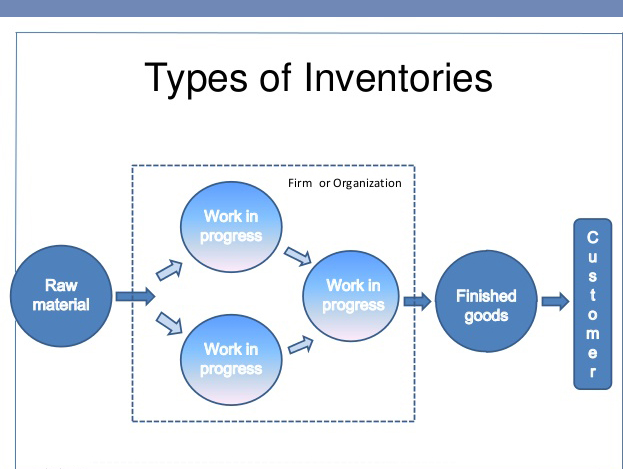
Why Automation Remains Essential for Inventory Management
It doesn't have versatile payment alternatives or high-volume adapters (the integration with Xero is undependable). Neither does it support any POS integrations, which isn't perfect if you have physical shops. Usually, the features are less innovative than Brightpearl, particularly when it pertains to customizable workflow automation. The website explains QB Commerce as "presently readily available to a limited group of clients" and discusses a wait-list.
It has order management automation (including purchase orders) and need forecasting with real-time information and the capability to manage supplier relationships. There are 70+ markets and multichannel integrations, and you can link major carriers and satisfaction services. It doesn't have incorporated real-time accounting or native combinations to third-party accounting software.

Latest Posts
Understanding Commercial Lending Rules in 2026
Understanding Essential Commercial Funding Requirements in 2026
Reducing Costs Through Automation in Modern Storefronts